Humans Mated with Neanderthals–They Still Are

We know that Homo sapiens (meaning the wise one) co-inhabited the earth with Neandertals. What’s more, DNA analysis proves that men and women of both species (or subspecies if you prefer), mated. Of course, there was no Valentine’s Day back when the daily grind for a working man meant bringing down a woolly mammoth with a sharp stick.…
Read MoreSwitching Off Anger with an Electrode

Devonte Washington, 15, was waiting on the platform of a Washington DC Metro subway station with his mother and two sisters headed to a barber shop to get a haircut for Easter Sunday church service. The young man glanced up at a stranger, 17-year-old Maurice Bellamy, who instantly took offence–pulled out a .38 caliber pistol…
Read MoreHow Scientific American Magazine Helps Shape the English Language

It is fascinating to consider that there was a time when such commonly used words as “pre-heat,” “download,” and “phone,” did not exist. More surprising, perhaps, is that the first recorded use of these words in print, and 205 others in the English language, was in Scientific American magazine. That’s according to the Oxford English…
Read MoreGamma Waves in the Brain–Fumes or Fundamental?
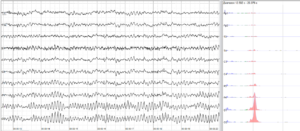
SAN DIEGO—The most fundamental question of how information is coded and processed in the brain is being re-examined, and the controversy drew an overflow crowd of neuroscientists to participate in an intense debate at the Society for Neuroscience Annual Meeting in San Diego. The textbook explanation that information is coded digitally by the firing rate…
Read MoreCalifornia wildfires–What sort of person is compelled to commit arson?

Something more can be done in addition to environmental action to help prevent wildfires. First published in Psychology Today. The inferno of tragic fires in California has destroyed thousands of homes, incinerated hundreds of thousands of acres, and killed many people this year. In the latest, the entire town of Paradise was reduced to smoldering ash. Highlighting the…
Read MoreA Gunman’s Regret
Science can help society grapple with the horrors of modern gun violence …A death row inmate wrote to say that something I had written had helped him understand how his life derailed. If he had read this material on the neuroscience of violence earlier in his life, he wrote, “I might not be here today.”…
Read MoreCulprit in Cuban Sonic Attack Revealed!
The alarming story that a mysterious energy beam caused traumatic brain injury to US Embassy personnel in Havana has consumed the media in an anxious frenzy not seen since the UFO hysteria of the 1950’s. Many possible suspects in this cruel affair have been fingered, but the perpetrator remains elusive. That, in my opinion, is…
Read MoreBlaming Fentanyl for the Nation’s Opiate Crisis?
The current spotlight on fentanyl as the culprit causing the sharp spike in opioid deaths in the United States, is motivated by a well-intentioned effort to address an alarming public health concern, but is blaming fentanyl and the drug industry an effective way to address the root cause of the epidemic, or a desperate effort…
Read MoreMuscling Up Brain-Computer Interfaces
The internet is abuzz with reports of neuroscientists linking the human brain to computers to eliminate the clickety keyboard and empower us to control personal electronic devices or manipulate robotic arms. But the science beneath the sizzle doesn’t support all the sensational claims, and there are significant practical hurdles. Unless you have a medical condition…
Read MoreThe Strange Case of the “Sonic Attack” in Havana: Cuban Scientists Narrow in on Suspect
HAVANA–The US State Department warns US citizens not to travel to Cuba because numerous US Embassy employees in Havana have been targeted in specific attacks that have caused hearing loss and serious central nervous system injury, but the culprit, means, and motive for the international crime remain a mystery despite a year of reporting. Senator…
Read More