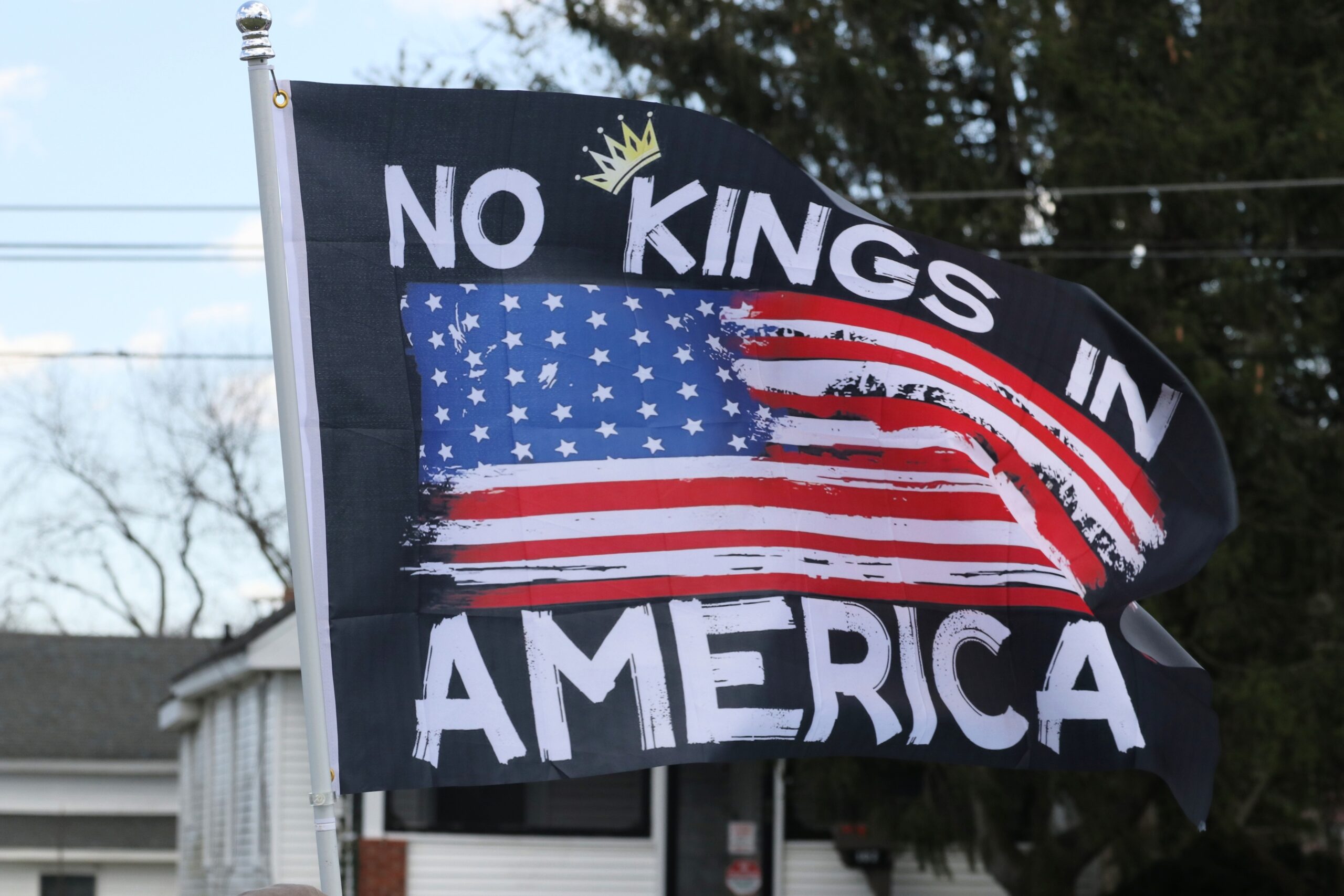
No Kings Protest Draws Hundreds in Solidly Republican Eastern Shore Town
This article authored by Zack Taylor and R. Douglas Fields first appeared in The Cambridge Spy on Mar 30, 2026. Photos by R. Douglas Fields
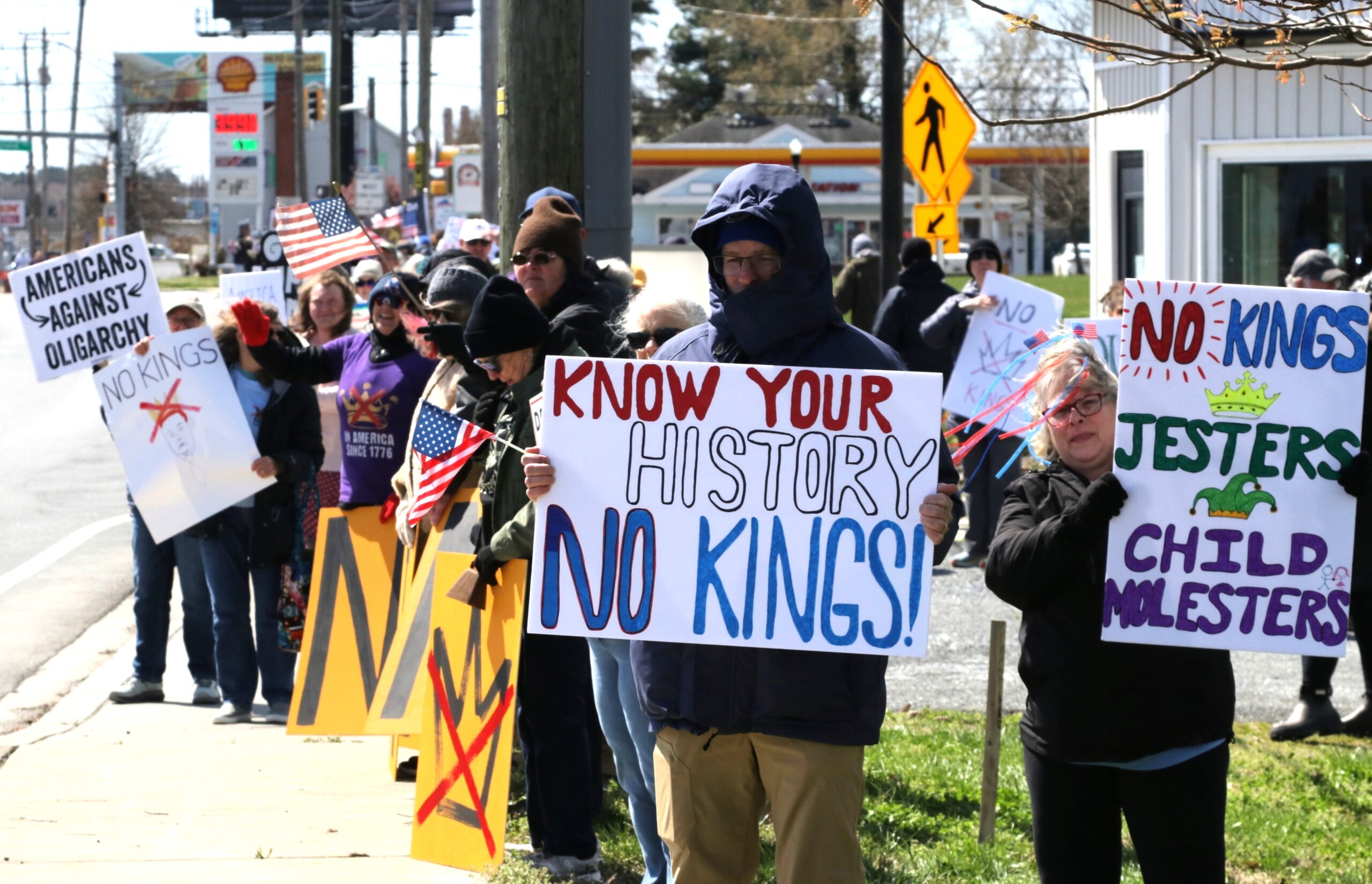
About 300 people of all ages demonstrated along Route 50 as one of thousands of “No Kings” protests staged across the country on Saturday.
Hundreds of protesters lined several blocks of Route 50 in Cambridge, Maryland on Saturday, March 28, joining a wave of “No Kings” demonstrations that reached several communities across the Shore. From Sailwinds Park to Maryland Avenue, participants stood shoulder to shoulder along the busy highway, holding signs and waving to passing traffic.
The Cambridge rally was part of a broader national effort organized through grassroots networks focused on presidential overreach, justice and the rule of law, immigration policy, unauthorized wars, and corruption. The spread of protests into rural areas has become a defining feature of the movement.
“There were No Kings protests practically on every corner on the Eastern Shore,” said Michelle Fowle, co-chair of Cambridge Indivisible, which organized the local event. “You had several hundred in Easton, several hundred on Kent Island, hundreds in Wicomico, and strong numbers in Salisbury. For an area that is considered red and Trump country, that says a lot.”
Drivers throughout the afternoon responded with a steady chorus of honking horns, while a cold, blustery wind tugged at posters and coats throughout the midday gathering. Despite the conditions, the crowd remained engaged along the roadside, drawing attention from one of the region’s busiest corridors.
Organizers estimated that roughly 300 participants would be in Cambridge, including a noticeable number of first-time demonstrators. Fowle said that the shift was significant, pointing to broader engagement among residents who may not have previously been politically active.
“I think the story is that rural America showed up and showed up in a way that was brave,” she said. “For some people, it can feel risky to stand out here, but they did it anyway.”
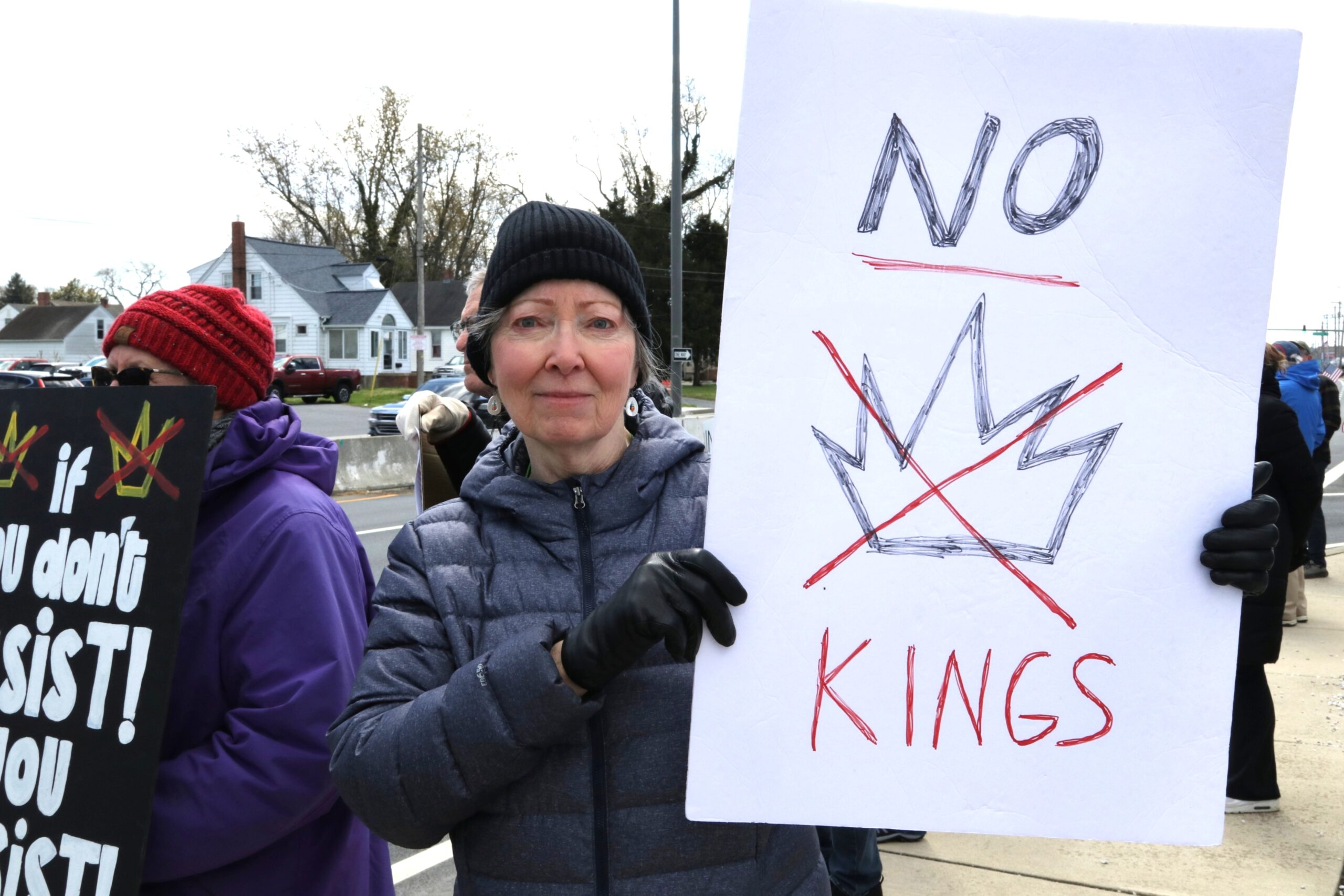
‘We’ve been through this before,” said Paula Lewis of Cambridge. “We know what it looks like when things start going in the wrong direction.”
The crowd reflected a wide range of ages, from children and families to retirees, with older residents particularly visible. Cambridge resident Paula Lewis, holding a “No Kings” sign with a crossed-out crown, said that presence reflects both local demographics and experience.
“That reflects Cambridge demographics, but it’s also because of our generation,” Lewis said. “We’ve been through this before. We were out there for civil rights, we were out there protesting the Vietnam War, and we know what it looks like when things start going in the wrong direction.”
While Lewis suggested that grandparents made up a large share of those present, the crowd appeared more mixed, with younger participants and families joining the line along the highway. The mix reinforced that the protest was not confined to a single group or issue.
Public response from passing motorists appeared largely supportive. “There are twice as many honks as middle fingers, I would say,” Lewis said.
Even so, she acknowledged the personal concerns that can come with speaking out locally. “My family and friends are concerned that I am doing this,” Lewis said. “There is so much anger out there right now, but I feel like you have to show up, because if you don’t, nothing changes.”
The messages displayed on protest signs reflected a broad range of concerns beyond the central “No Kings” theme. Participants carried signs addressing immigration enforcement, calls to curtail ICE activity, and opposition to potential U.S. military escalation with Iran.
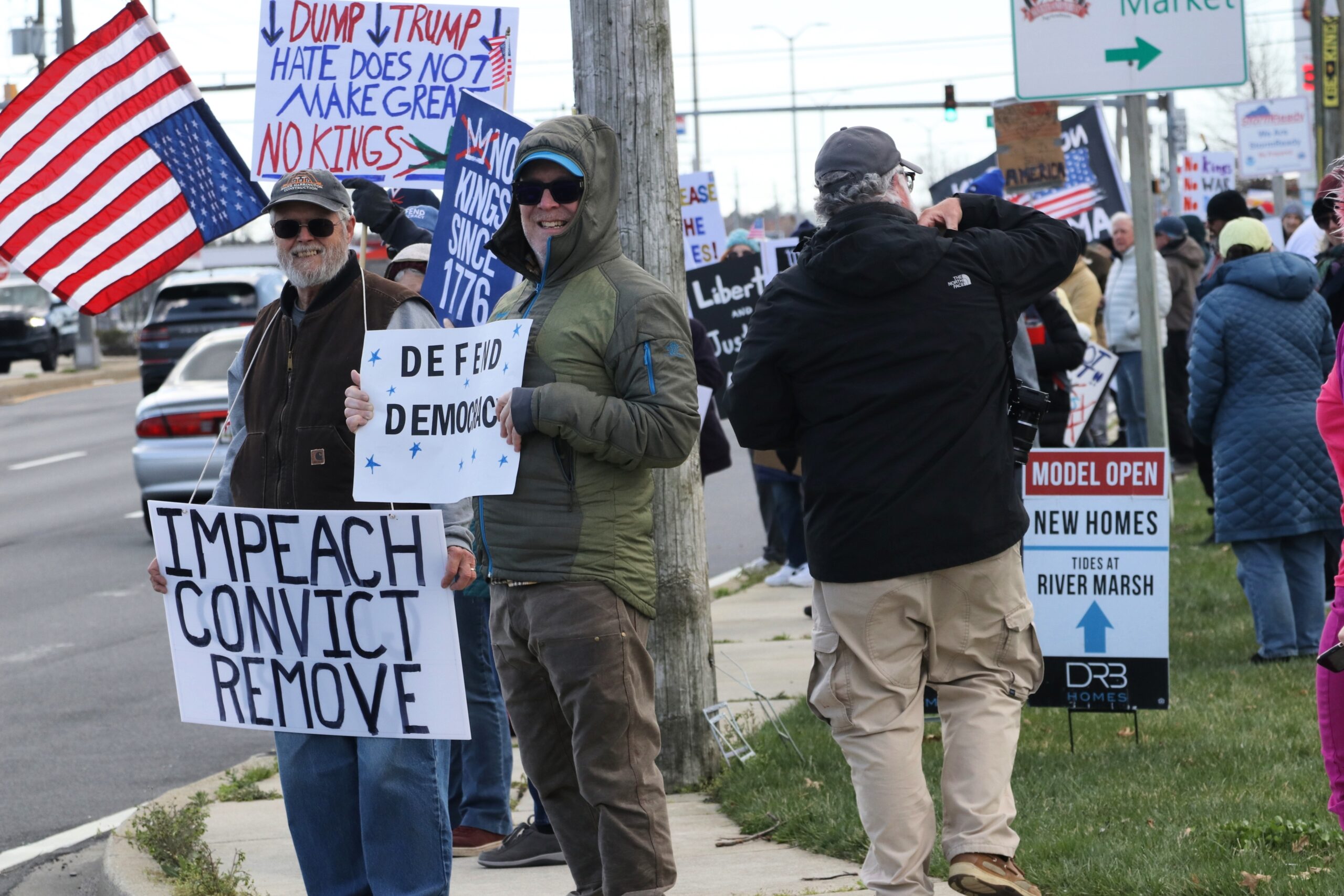
Organizers estimated that roughly 300 participants would be in Cambridge, including a noticeable number of first-time demonstrators, reflecting broader engagement among residents.
Fowle said that range reflects the nature of the movement rather than a lack of focus. “This isn’t about one single issue,” she said. “It’s about a pattern of behavior and people feeling like the system is being pushed too far, and deciding to come together and say no.”
She added that demonstrations are only one part of a broader effort. “You have to layer it in order to drive change,” Fowle said, pointing to ongoing work that includes voter outreach, local meetings, and engagement with city council and school board issues.
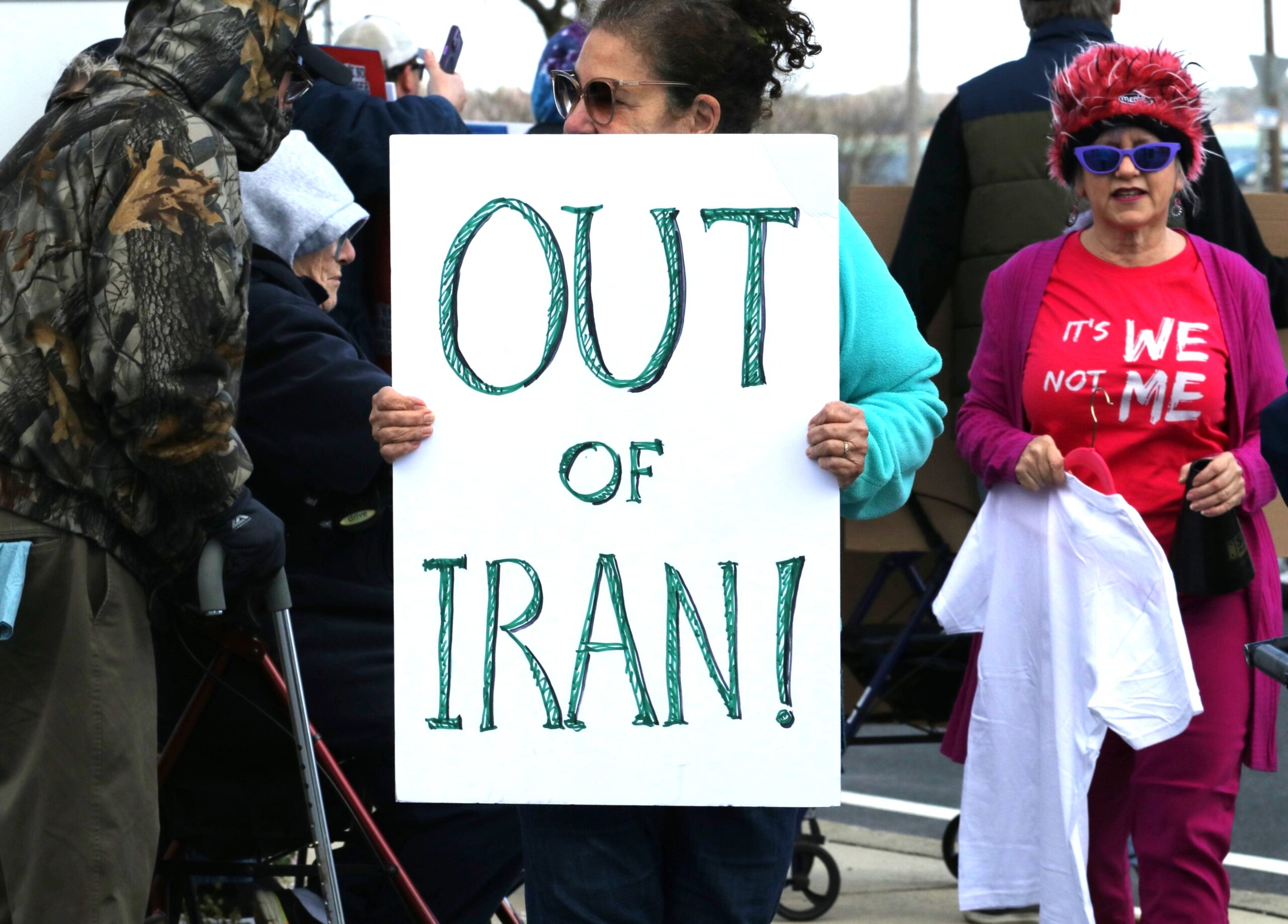
Drivers throughout the afternoon responded with a steady chorus of honking horns, while a cold, blustery wind tugged at posters and coats throughout the midday gathering.
Cambridge Indivisible holds regular meetings and works to build local political infrastructure, including identifying potential candidates for office. Fowle said sustained local engagement is as important as rally turnout.
Nationally, the “No Kings” demonstrations have drawn millions of participants in recent months, according to organizers, making them among the largest protest efforts in U.S. history. While the largest crowds have been in major cities, events like the one in Cambridge highlight how widely the movement has spread.