Working in the Shadows
The Unseen Community of Eastern Shore Writers
Hardworking watermen are Eastern Shore icons, but there is a hidden community of workers in the Chesapeake region that few people know about.
“OMG—Yeah!” Liza Roe said she was surprised to learn that there was such a large community of people like her working on the Shore. Roe is a poet.
I met the young woman at the Bay to Ocean Writers Conference held at Chesapeake College, Wye Mills, on Saturday, March 14. Over 200 writers of fiction, non-fiction, and poetry attended this, the 29th annual meeting.
“We are sold out this year, as always,” says Tara Elliott, Executive Director of the Eastern Shore Writers Association (ESWA). “And the meeting grows every year.” ESWA is a non-profit organization run entirely by volunteers.
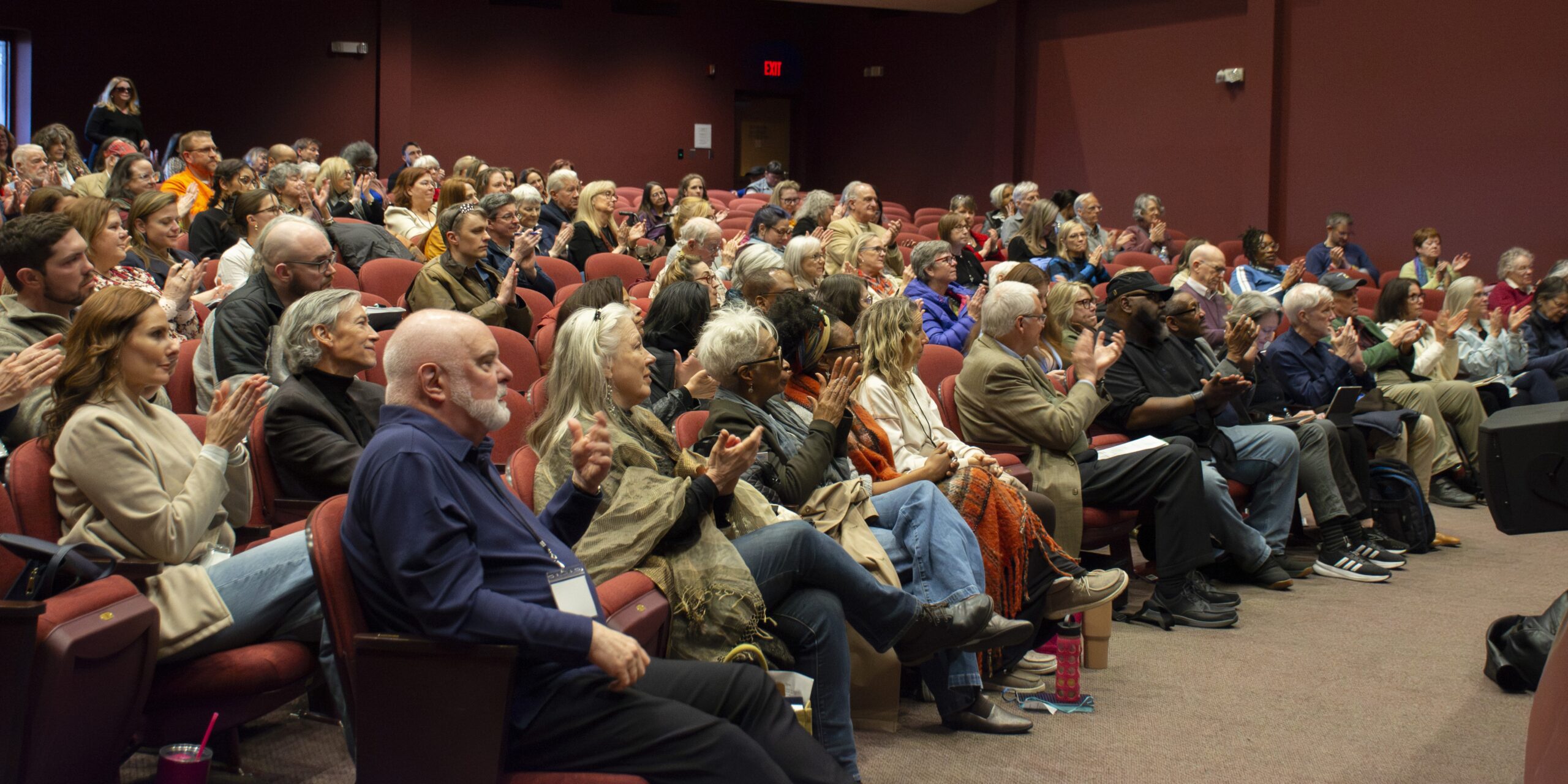
Photo by Zoe Leonard
Local authors attending the Bay to Ocean Conference at Chesapeake College.
Unseen Workers Drawn to the Eastern Shore
Watermen hauling crab pots out of choppy grey waters is a picturesque scene, but a writer hunched over a laptop tapping clickety clack on a keyboard is not. The invisibility of writers at work is why they are largely unknown, but the Eastern Shore draws large numbers of writers for many reasons.
“There is a supreme isolation on the Eastern Shore,” Elliott says. She was raised on the Eastern Shore from the age of 14 and now teaches English at Bennett Middle School in Fruitland, MD, near Salisbury. She, together with Ron Sauder, past president of ESWA, co-chaired the BTO conference.
“You can drive twenty minutes in any direction and wind up absolutely nowhere, and at the same time, there’s a true friendliness of the spirit of the people who live here on the Eastern Shore that foster the development of writing,” Elliott says.
Roe and many others at the meeting also say that being in a rural setting close to nature is inspirational. The dazzling alchemy of an Eastern Shore sun setting on the shimmering waters of the Bay; the seasonal parade of migratory birds across the sky; the bounty of marine, marsh, and forest life, attract writers to the Eastern Shore and inspire those who live and work here to write.
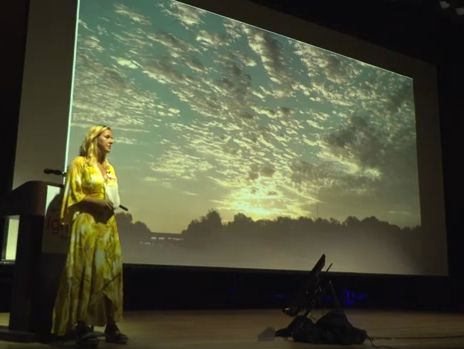
A glorious sunrise over the marsh that inspired poet Liza Roe.
It was a glorious sunrise over the vast panorama of a tidewater marsh that inspired Liza Roe’s poem “Sunrise,” about change.
“There is an Eastern Shore voice,” Roe says about the tone of stories and poems created by writers here.
But mostly it is the rich diversity of characters living their lives in the sparsely populated rural areas and small towns of the Eastern Shore that provide a wealth of material for writers. Afterall, there are no stories without characters, and every character you meet in life has a story.
“I can’t think of a stronger place in the universe that has its share of unique, extreme, and extraordinary characters,” Elliott says.
“All my characters are my family and people I grew up with,” says S.A. Cosby.
Cosby was the keynote speaker at the BTO conference. He is a NY Times bestselling author of crime fiction novels, which have the likes of Spielberg seeking film rights and former president Barak Obama praising on his recommended reading lists.
If your image of a book author is a pale man of spindly build, with thinning hair and wearing wire-rimmed glasses, you couldn’t be farther from the mark with Cosby. His burly linebacker physique and barroom brawling background evoke the quintessential image of a tough, hardworking, African American waterman. Indeed, Cosby is the son of an illiterate waterman who eked out a meager living trawling for scallops and oysters in Mathews County, in the tidewater region of Virginia.
“I grew up dirt poor,” he says.
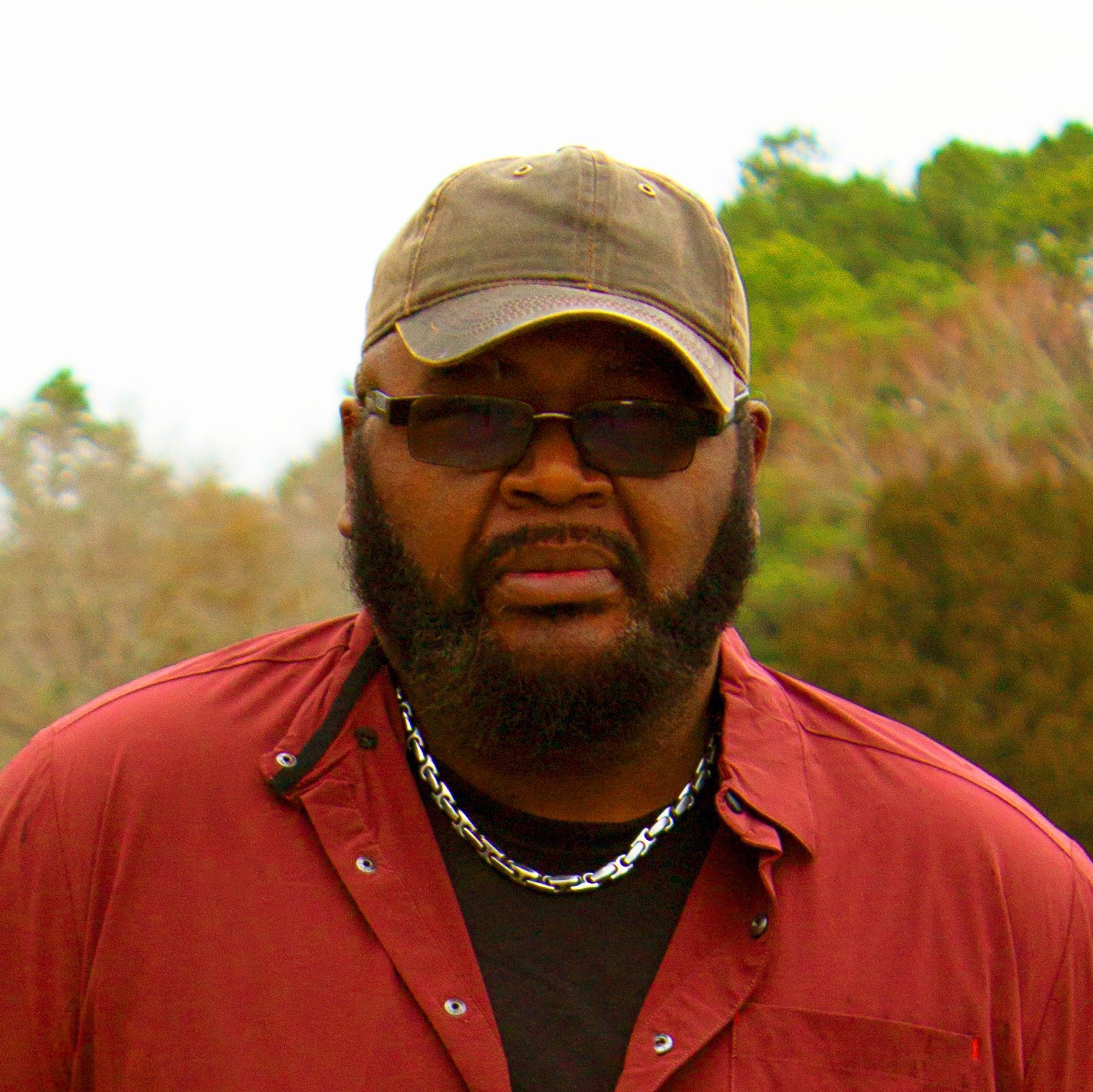
S.A. Cosby says all his characters are family and people he grew up with. Photo by Sam Sauter
Cosby lived in a trailer with no running water until he was fifteen. After his parents separated, it was his grandmother who inspired him to read and begin writing stories.
“In the small town I grew up in everyone knew everyone,” he says. “It was never a ‘Who done it?’ Everyone knew who done it! Proving it was the problem,” and that’s the engine that drives his wildly successful, gritty crime fiction novels.
Cosby is a gifted storyteller not only in books but in spellbinding conversation. He was driven to write from a young age. He drafted his first book for publication while working at a big box hardware store. It was rejected 67 times before Austin S. Camacho, who also spoke at the BTO conference, recognized the enormous talent in this writer and published his first book.
In that respect Cosby is typical of many ESWA members.
“In addition to many retired people who are writing, we also have a lot of working-class writers, people who hold a full-time job. They put every gram of effort and desire and strength into their independent writing during their off hours, whether that’s at night or on the weekends or squeezing out a few days off of work to finish a project. I’m always impressed with the drive that our writers have,” Elliott says.
Why Write, and It Takes a Team
People are compelled to write because it is a supremely creative act, and because “Writing leaves a legacy,” says Nancy Mitchell, Poet Laureate of Salisbury, who was presented with the Legacy award at the BTO conference. “But writing is hard. It takes practice and discipline.”
Anyone can be a fisherman, but it takes a team to be a waterman. Likewise, anyone can be a writer, but it takes a team to be an author. To be published, an author needs a team of editors, agents, marketing experts, and other writers to read and criticize their drafts.
“Writing is the most solitary team sport,” Cosby says. To succeed, “You have to get out into the writing community–to meetings like this,” he says.
Roe says the friendly, helpful people who attend the BTO meeting is the main reason that she comes.
Pamela Lerner Hines and her husband, Robert, came to the meeting for the same reason. They drove from their home in Virginia to Wye Mills in a grueling 6-hour trip that would normally take 2 hours, but they were bogged down by unusually heavy bridge traffic. Hines’ unpublished anthology of poems was a finalist in the 2025 Annual Writer’s Digest Poetry Award. She hoped to learn at the meeting how to get them published.
In a session run by writer and editor Jennifer Keith, Hines was the first to break the ice and read her unpublished poem aloud. She had never read any of her work in public before.
“I was hoping for feedback,” she says. Keith complimented her work, gave some constructive criticisms, and offered to send her a list of places where there are poetry readings in her area. The two exchanged emails.
ESWA also holds weekly Zoom meetings on writing, hosted by Tara Elliott. “Every Thursday night from 7:30 to 9:00, you can tap in,” she says. “It’s free and open to the general public, through support from ESWA. It gives you craft tips on writing. If you’ve ever wanted to try writing and you are a little nervous, you can pop in at any time and join us and learn all sorts of tips in all sorts of genres of writing.”
Most attendees of the Zoom meetings are Eastern Shore residents, but some come from across the country. “We have writers who are brand new to writing who have never sat down and tried it before, and all the way up to people who have been published in such places as the New Yorker.”
Writers who draw inspiration from the community are moved to give back. Hiram Larew spoke about his work with the organization Poetry X Hunger. The organization uses poetry fundraising events to raise awareness of food insecurity in our community and to fund efforts to combat it. “We have raised $25,000 for anti-hunger groups,” he says.
Elliott added, “Many of my kids are showing up to school starving, because of the increasing cost of electricity.”
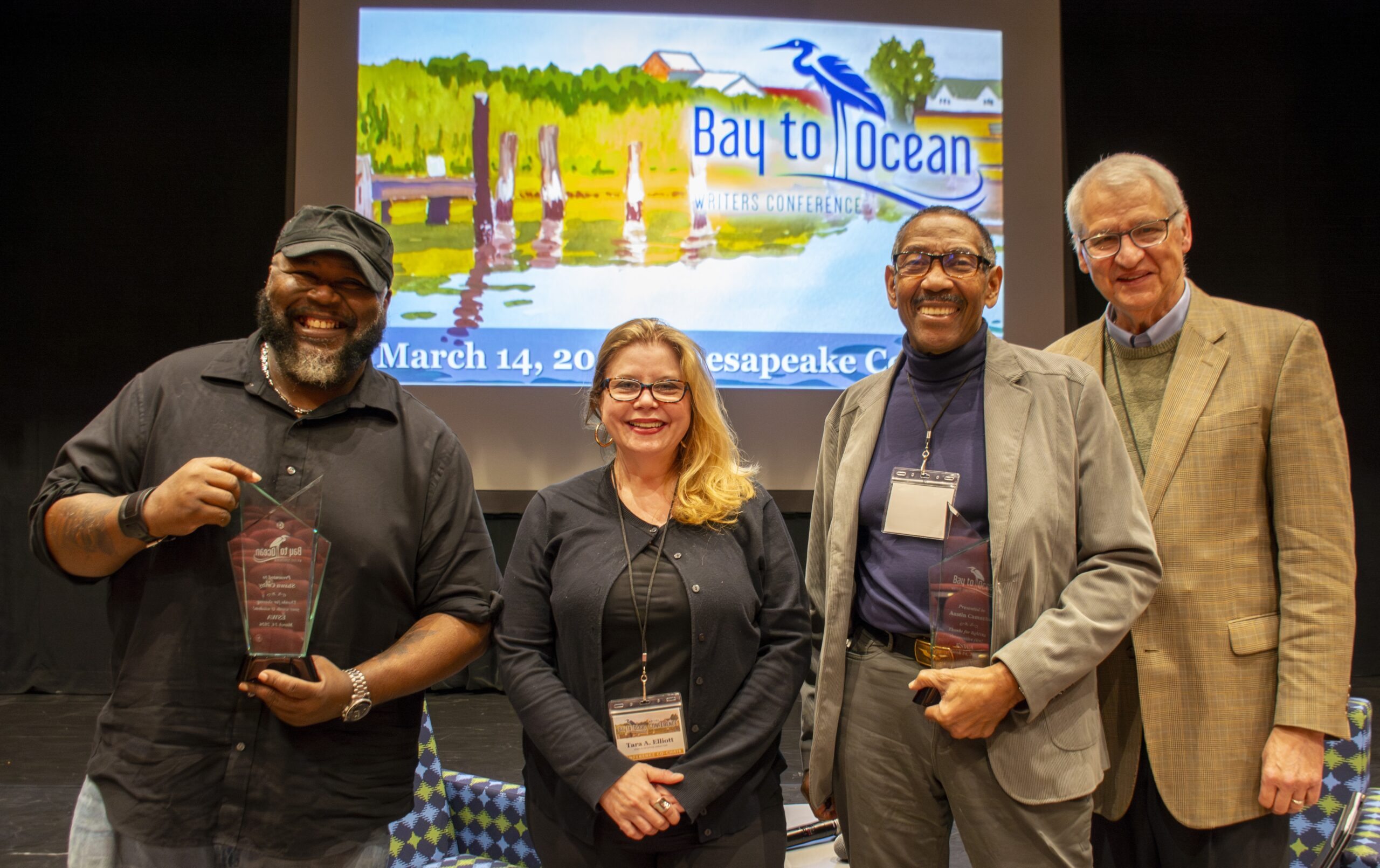
Photo by Zoe Leonard
Author and keynote speaker, S.A. Cosby, Tara A. Elliott, Executive Director of ESWA , author Austin S. Camacho, and Ron Sauder, past president of ESWA, on stage at the 2026 Bay to Ocean Conference.
Words Bring Change
“Books can change people’s lives,” Mitchell says in accepting her award.
Writing them can change an author’s life.
Cosby says publication of his first book changed everything. “I write for a living now. I have a house and a new car and travel. The former president knows my name!”
Cosby told how he was astonished to find himself in Paris on a book tour. He visited places where Ernest Hemingway had lived and worked. Conjuring up the famous author, he sat down at a Parisian sidewalk café and ordered a beer. While sipping the cold brew he called his mom in the United States to share the moment. Hearing his mom’s voice and finding his own voice begin to quiver, he ended the call suddenly as a powerful wave of gratitude welled up inside the big man.
“I never could have imagined this. It is better than anything I could have imagined.”
Cosby spoke of how glad he was to have made amends with his father before he died last year. “He was the most tireless man I ever knew. Strong, kind man.”
“It was his work ethic” that made me a successful writer. “He would get up at 4 am to trawl scallops and oysters. You get up, and you do your job. Do your work as good as you can. I put blood, sweat, and tears into my books.”
Visiting his dad shortly before he passed away, Cosby was surprised to see all his books lined up on display on his dad’s entertainment center.
Cosby ribbed his illiterate dad. “Why you got all those books up there? You can’t even read them.”
“Yeah, but you wrote them.”
First published in The Cambridge Spy